When Does Your Pet Need a Specialized Veterinary Ultrasound?

When Does Your Pet Need a Specialized Veterinary Ultrasound?
If your dog or cat has recently been referred for a specialized ultrasound, you may be wondering why this advanced imaging is needed and how it can help your pet. Whether your veterinarian mentioned an abdominal ultrasound, an echocardiogram, or another advanced scan, it is natural to want to understand what these procedures involve and what they can reveal about your pet’s health. At 4 Paws Imaging FL, located at 195 Concord Dr, Casselberry, FL 32707, we specialize in advanced veterinary imaging services for dogs and cats. Our board-certified specialists interpret every scan, providing your primary veterinarian with detailed information that guides diagnosis and treatment. In this blog, we will explore when your pet might need a specialized ultrasound, what conditions these scans can detect, and how our expertise in Casselberry and surrounding communities supports your pet’s care.
Recognizing When Advanced Imaging Might Be Needed
Common Signs That May Prompt a Referral
Veterinarians often recommend specialized ultrasounds when routine examinations or basic diagnostic tests leave questions unanswered. Certain symptoms in dogs and cats are especially likely to prompt a referral for advanced imaging. These symptoms include unexplained weight loss, persistent vomiting or diarrhea, changes in appetite, abdominal swelling or discomfort, and the discovery of a lump or mass during a physical exam. Additionally, signs of heart disease such as coughing, exercise intolerance, or fainting may lead your veterinarian to recommend a cardiac ultrasound or echocardiogram. For some pets, difficulty breathing, irregular heart rhythms, or even pre-anesthetic screening for underlying cardiac conditions can make advanced imaging a critical next step.
If your veterinarian has identified a mass or swelling in your pet’s abdomen, you can learn more about when imaging is needed for dogs with an abdominal mass or lump or for cats with an abdominal mass or lump on our website. It is important to remember that many internal issues cannot be fully diagnosed through physical examination or basic X-rays alone, which is why specialized ultrasounds are such valuable tools in veterinary medicine.
Subtle Symptoms That Should Not Be Ignored
Sometimes, the signs that your pet needs advanced imaging are subtle. For instance, mild but persistent weight loss, even if your pet seems otherwise well, can be an early indicator of internal disease. Gradual changes in thirst, urination, or activity levels may also signal underlying issues. If you have noticed your dog or cat’s belly appears more rounded or firm, or if you have seen changes in breathing patterns, it is a good idea to mention these to your primary veterinarian, as these signs may justify further investigation with specialized imaging.
Understanding Why Specialized Ultrasounds Are Needed
What Makes Specialized Veterinary Imaging Different?
While general practice veterinarians can perform many diagnostic procedures, certain conditions require the precision and expertise of specialty imaging. At 4 Paws Imaging FL, we use state-of-the-art ultrasound equipment to produce high-resolution images of your pet’s internal organs, heart, or glands. Our board-certified specialists interpret these images, providing in-depth insights that go far beyond what can be learned from a standard physical exam or general radiographs.
Ultrasound is non-invasive and does not involve radiation, making it safe for repeated use and for pets at any life stage. Abdominal ultrasounds help us visualize organs such as the liver, kidneys, spleen, and intestines, as well as detect tumors, cysts, or fluid accumulation. Echocardiograms are specialized ultrasounds of the heart, allowing us to assess heart structure and function in detail. Electrocardiograms and Holter monitors further help us evaluate abnormal heart rhythms and monitor them over time.
Conditions Revealed by Specialized Imaging
Specialized veterinary ultrasounds can detect a wide range of health issues in dogs and cats. These include tumors or masses in the liver, spleen, or other organs; inflammatory conditions such as pancreatitis or hepatitis; fluid accumulation in the abdomen or chest; kidney or bladder stones; and abnormalities in the thyroid gland. Cardiac ultrasounds, or echocardiograms, are essential for diagnosing heart disease, valve disorders, congenital defects, and cardiomyopathies.
In some cases, advanced imaging plays a critical role in pre-anesthetic planning. If your pet needs surgery or a dental procedure, your veterinarian may recommend pre-anesthetic cardiac screening to ensure your pet’s heart is healthy enough for anesthesia. You can find more information about pre-anesthetic cardiac screening for pets on our website.
What to Expect During a Veterinary Ultrasound or Echocardiogram
The Imaging Process
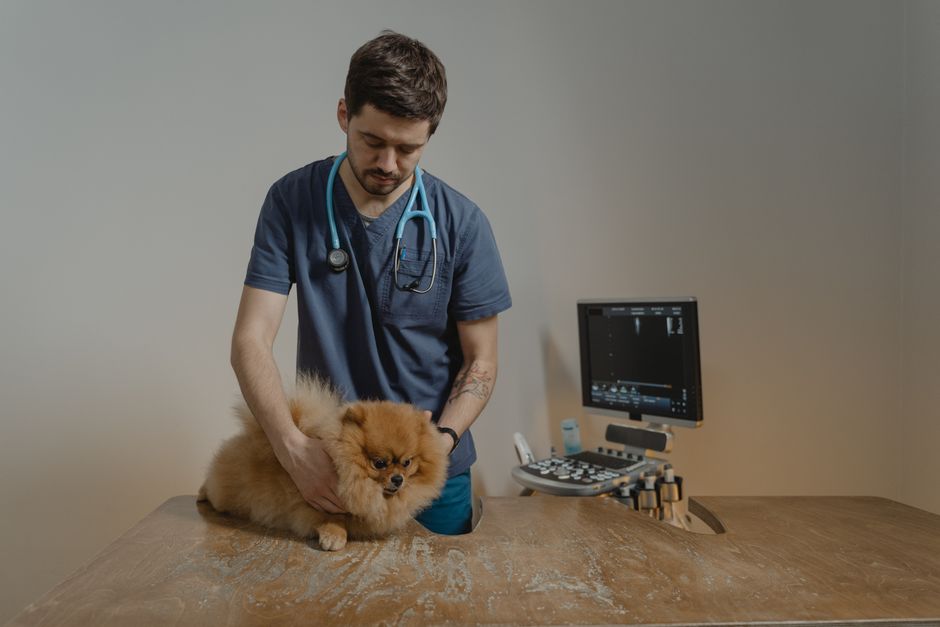
If your dog or cat is referred to 4 Paws Imaging FL for a specialized ultrasound, here is what you can expect. Most ultrasounds do not require anesthesia; your pet will typically be awake and gently restrained during the procedure. For abdominal ultrasounds, a small area of fur will be shaved to allow optimal contact between the ultrasound probe and the skin. The procedure is generally comfortable for your pet, and our veterinary team takes great care to minimize stress.
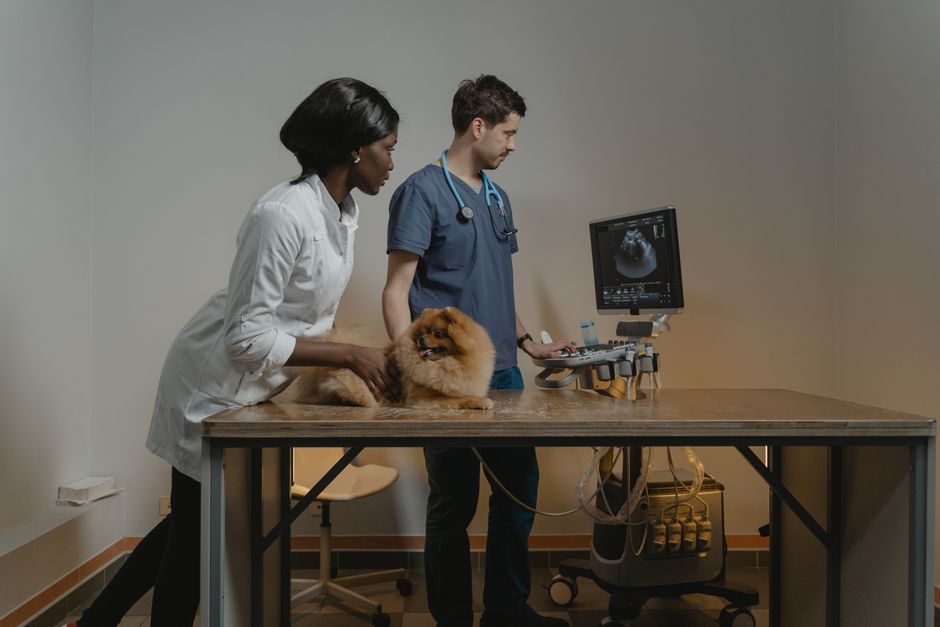
For cardiac ultrasounds, or echocardiograms, your pet will rest on a padded table while our specialists use the ultrasound probe to capture detailed images of the heart in real time. Electrocardiograms involve attaching small electrodes to your pet’s skin to record the heart’s electrical activity. Holter monitors are wearable devices that allow us to monitor heart rhythms over a 24-hour period, which can be particularly helpful for pets with intermittent symptoms.
Interpreting the Results
Once the imaging is complete, our board-certified specialists interpret the scans and communicate their findings directly to your primary veterinarian. This collaborative approach ensures that your veterinarian can make informed decisions about your pet’s treatment plan, whether that involves medical management, surgery, or ongoing monitoring. The detailed information provided by advanced imaging is often critical for tailoring care to your pet’s unique needs.
Steps You Can Take at Home to Support Your Pet’s Health
Monitoring for Changes
While only a veterinary professional can diagnose the need for specialized imaging, pet owners play a key role in monitoring for changes at home. Pay close attention to your pet’s eating and drinking habits, weight, energy level, and behavior. If you notice symptoms such as persistent vomiting, diarrhea, bloating, coughing, or difficulty breathing, contact your veterinarian promptly. Early detection of changes can lead to earlier diagnosis and more effective treatment.
Keeping Up with Regular Veterinary Visits
Regular wellness visits with your primary veterinarian are essential for catching health issues before they become advanced. Your veterinarian will perform a thorough physical exam and may recommend screening tests based on your pet’s age, breed, or risk factors. If your veterinarian suggests advanced imaging, it is because they want to provide the most accurate diagnosis and best possible care for your pet.
When to Seek Specialized Imaging for Your Pet
Knowing When to Ask About Advanced Diagnostics
If your pet has been experiencing symptoms such as unexplained weight loss, a swollen or bloated abdomen, or signs of heart disease, it is important to discuss these with your primary veterinarian. In some cases, your veterinarian may refer you directly to a specialty imaging practice like 4 Paws Imaging FL. If you are concerned about a specific symptom, you can find additional information about abdominal swelling or bloating in dogs and abdominal swelling or bloating in cats on our website.
Some conditions that commonly prompt referral for advanced imaging include persistent gastrointestinal issues, newly discovered lumps or masses, changes in urination, or cardiac symptoms such as coughing or collapse. Your primary veterinarian will help determine when a specialized ultrasound or other advanced diagnostic is warranted.
The Importance of Prompt Diagnosis
Delaying advanced diagnostics can allow underlying conditions to worsen. Early diagnosis through specialized imaging can often mean a wider range of treatment options and a better prognosis for your pet. If your veterinarian recommends a referral, it is a sign that they want to ensure your pet receives the most comprehensive care available.
Supporting Your Pet’s Health With Specialty Imaging
Why Choose 4 Paws Imaging FL
At 4 Paws Imaging FL, our only focus is advanced diagnostic imaging for dogs and cats. By working closely with your primary veterinarian, our board-certified specialists provide the detailed information needed for accurate diagnosis and optimal care. From abdominal ultrasounds to echocardiograms, thyroid ultrasounds, and pregnancy ultrasounds, we bring state-of-the-art technology and compassionate expertise to every scan.
Our practice is conveniently located in Casselberry, FL, serving pet owners in Casselberry and surrounding communities. We understand that the thought of advanced diagnostics can be stressful, but our team is here to guide you and your pet every step of the way.
Take the Next Step for Your Pet’s Health
If your primary veterinarian has recommended a specialized ultrasound or if you have questions about advanced imaging for your dog or cat, we invite you to contact our team of veterinary imaging specialists. Scheduling an appointment at 4 Paws Imaging FL is a proactive step in supporting your pet’s health and ensuring the most accurate diagnosis possible. When searching for a specialty vet near me, choose a practice that combines advanced technology with compassionate, expert care.
To learn more or book an appointment, call us at (321) 343-4758 or visit our practice at 195 Concord Dr, Casselberry, FL 32707. You can also explore our website for more information on services like abdominal ultrasounds and echocardiograms. Our veterinary professionals are dedicated to providing your pet with the highest standard of imaging and care.
Your pet’s health and comfort are always our top priority. If you have any concerns, please do not hesitate to reach out—specialized imaging can make all the difference in your pet’s well-being and quality of life.