How Abdominal Ultrasound Helps Diagnose Digestive Issues in Pets

How Abdominal Ultrasound Helps Diagnose Digestive Issues in Pets
Digestive problems can be distressing for both pets and their owners. When your dog or cat is experiencing persistent vomiting, diarrhea, or unexplained weight loss, it is natural to feel concerned and eager for answers. At 4 Paws Imaging FL, located at 195 Concord Dr, Casselberry, FL 32707, our specialty imaging services are designed to help veterinarians uncover the root of your pet’s digestive issues. Abdominal ultrasounds provide a safe, non-invasive way to see inside your pet’s abdomen, offering vital information that may not be visible through standard exams or x-rays. In this post, we will explore how abdominal ultrasound can clarify confusing digestive symptoms, what to expect during the process, and how our team of board-certified specialists supports your pet’s care through advanced imaging. Whether you live in Casselberry or the surrounding communities, our team is here to help your veterinarian find the answers your pet needs.
When Should You Suspect Digestive Problems in Your Pet?
Many digestive issues present with subtle symptoms at first, making it important for pet owners to recognize when their dog or cat may need further evaluation. Common signs that your pet could be struggling with a gastrointestinal problem include persistent vomiting that does not resolve in a day or two, diarrhea that lingers or recurs, a sudden or gradual loss of appetite, and noticeable weight loss even with a normal diet. Additional warning signs are straining to defecate, passing blood in the stool, excessive flatulence, or visible discomfort in the abdomen such as restlessness, stretching, or crying when touched. In some cases, pets may also experience changes in behavior like lethargy or hiding more than usual.
While occasional digestive upset can occur from dietary indiscretions or minor infections, ongoing or severe symptoms often indicate an underlying problem that requires professional attention. Your primary care veterinarian may recommend advanced imaging, such as an abdominal ultrasound, when physical exams and basic laboratory tests do not reveal the cause of your pet’s digestive distress.
Understanding What Causes Digestive Tract Issues in Dogs and Cats
Digestive problems can arise from a range of causes, each requiring a different treatment approach. Infections from bacteria, viruses, or parasites are frequent culprits, especially in young or newly adopted pets. Dietary indiscretion, such as eating table scraps or foreign objects, can lead to inflammation, obstruction, or even perforation of the intestines. Chronic conditions like inflammatory bowel disease (IBD), food allergies, or pancreatitis can result in recurring digestive symptoms that are difficult to manage without a clear diagnosis.
Tumors, both benign and malignant, may affect the stomach, intestines, liver, or pancreas, leading to vague symptoms that progress over time. Other possible causes include liver or kidney disease, hormonal imbalances such as hyperthyroidism in cats, and hereditary conditions that affect nutrient absorption. Because so many different diseases can look similar on the surface, advanced imaging is often necessary to pinpoint the cause, guide treatment, and predict prognosis.
How Abdominal Ultrasound Reveals the Source of Digestive Problems
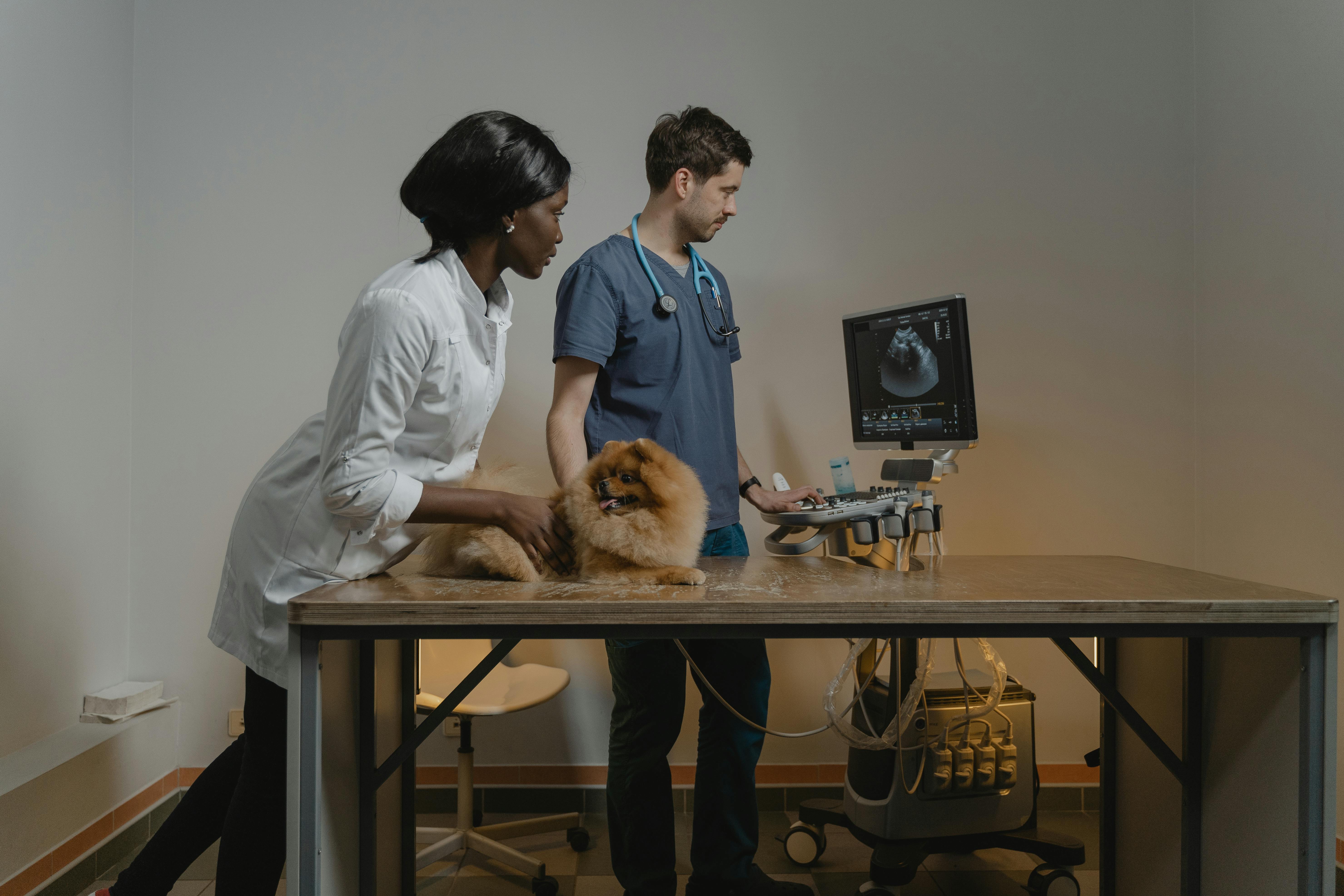
Abdominal ultrasound is a highly effective, non-invasive tool for evaluating your pet’s digestive system and associated organs. Using sound waves, the ultrasound machine creates detailed images of the stomach, small and large intestines, liver, kidneys, spleen, pancreas, bladder, and lymph nodes. This allows our veterinary imaging specialists to identify abnormalities such as thickening of the intestinal wall, masses or tumors, fluid accumulation, enlarged organs, or signs of inflammation.
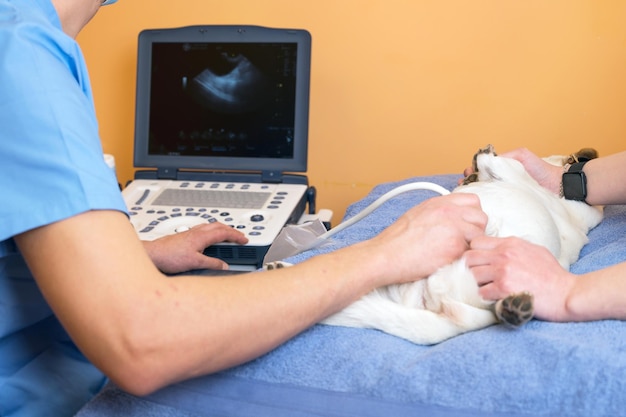
During an abdominal ultrasound, your pet will typically lie comfortably on a padded table while a trained veterinary professional gently moves a probe over the shaved area of the abdomen. Most pets tolerate the procedure very well, and sedation is rarely required unless your pet is particularly anxious or unable to remain still. The scan itself usually takes about 30 to 60 minutes, depending on the complexity of the case and the number of organs being evaluated.
Ultrasound is especially valuable because it can detect soft tissue changes that x-rays might miss, such as subtle swelling, early tumors, or internal bleeding. When needed, ultrasound guidance can also be used to collect samples of fluid or tissue for laboratory analysis without opening the abdomen surgically. At 4 Paws Imaging FL, our board-certified specialists interpret every scan, providing your veterinarian with detailed findings and recommendations for the next steps in your pet’s care. To learn more about the process, visit our abdominal ultrasounds information page.
What Happens After an Abdominal Ultrasound?
Once your pet’s abdominal ultrasound is complete, the images and findings are shared with your primary care veterinarian. The report may identify a specific diagnosis, such as pancreatitis, a gastrointestinal mass, or evidence of inflammatory bowel disease, allowing your veterinarian to tailor a treatment plan. In some cases, the ultrasound will suggest further testing, such as bloodwork, a biopsy, or endoscopy, to confirm a diagnosis or rule out other conditions.
Treatment recommendations will depend on what is found. For example, infections may be managed with targeted medications, inflammatory conditions might require dietary changes and anti-inflammatory drugs, and surgical intervention could be necessary for obstructions or tumors. The most important benefit of abdominal ultrasound is its ability to provide a clear roadmap, so your veterinary team can choose the most effective and least invasive treatment for your pet.
Supporting Your Pet’s Digestive Health at Home
While advanced imaging is invaluable for diagnosing complex digestive problems, there are steps you can take at home to help protect your dog or cat’s gastrointestinal health. Feeding a balanced, high-quality diet formulated for your pet’s age and lifestyle is a good foundation. Avoid giving table scraps or allowing your pet to scavenge outdoors, as sudden dietary changes and ingestion of foreign objects are common causes of digestive upset.
Keeping your pet’s living environment clean, providing regular preventive care such as parasite control, and ensuring fresh water is always available can reduce the risk of infections and dehydration. Monitor your pet for any changes in appetite, stool quality, or energy level, and act early if something seems off. Remember, digestive symptoms that persist or worsen should always prompt a call to your veterinarian, as early intervention leads to better outcomes.
When to Seek Veterinary Imaging for Digestive Concerns
It can be difficult to know when your pet’s digestive issues require advanced diagnostics. In general, if your dog or cat has vomiting or diarrhea lasting more than 24 to 48 hours, shows signs of abdominal pain, becomes lethargic, refuses to eat, or develops sudden weight loss, it is important to consult your primary care veterinarian promptly. Your veterinarian may recommend referral to a specialty imaging center like 4 Paws Imaging FL if initial tests are inconclusive or if a more detailed look inside the abdomen is needed.
Abdominal ultrasound is particularly helpful in cases where x-rays are unclear, when a mass or fluid is suspected, or when ongoing symptoms do not respond to standard treatments. Our veterinary imaging team is here to support your veterinarian by providing precise, timely answers through advanced diagnostic technology.
Why Choose 4 Paws Imaging FL for Your Pet’s Abdominal Ultrasound?
Selecting a specialty imaging center ensures that your pet benefits from the latest technology and expert interpretation. At 4 Paws Imaging FL in Casselberry, our board-certified specialists have extensive experience with abdominal ultrasounds, echocardiograms, and other advanced diagnostics for dogs and cats. We work closely with your primary care veterinarian to ensure every scan is tailored to your pet’s unique needs and every result is communicated efficiently for seamless care. Our convenient location at 195 Concord Dr, Casselberry, FL 32707 serves Casselberry and the surrounding communities, making it easy to access specialty imaging when your pet needs it most.
When searching for a specialty vet near me, it is important to find a team that partners with your veterinarian and focuses exclusively on advanced diagnostics. Our veterinary imaging professionals are dedicated to helping you and your pet move forward with clarity and confidence.
Take the Next Step for Your Pet’s Digestive Health
If your pet is experiencing ongoing digestive problems and your veterinarian has recommended advanced imaging, 4 Paws Imaging FL is here to provide the answers you need. Abdominal ultrasounds can be a crucial step in diagnosing and managing gastrointestinal issues, giving your pet the best possible chance for recovery. To learn more about our abdominal ultrasound services or to discuss a referral, visit our abdominal ultrasounds information page or contact our veterinary imaging team at (321) 343-4758. We are committed to supporting you and your pet with expertise, compassion, and state-of-the-art diagnostic care.
This article is for informational purposes only and does not replace professional veterinary advice. Always consult your primary veterinarian regarding your pet’s health and before pursuing any diagnostic or treatment plan.